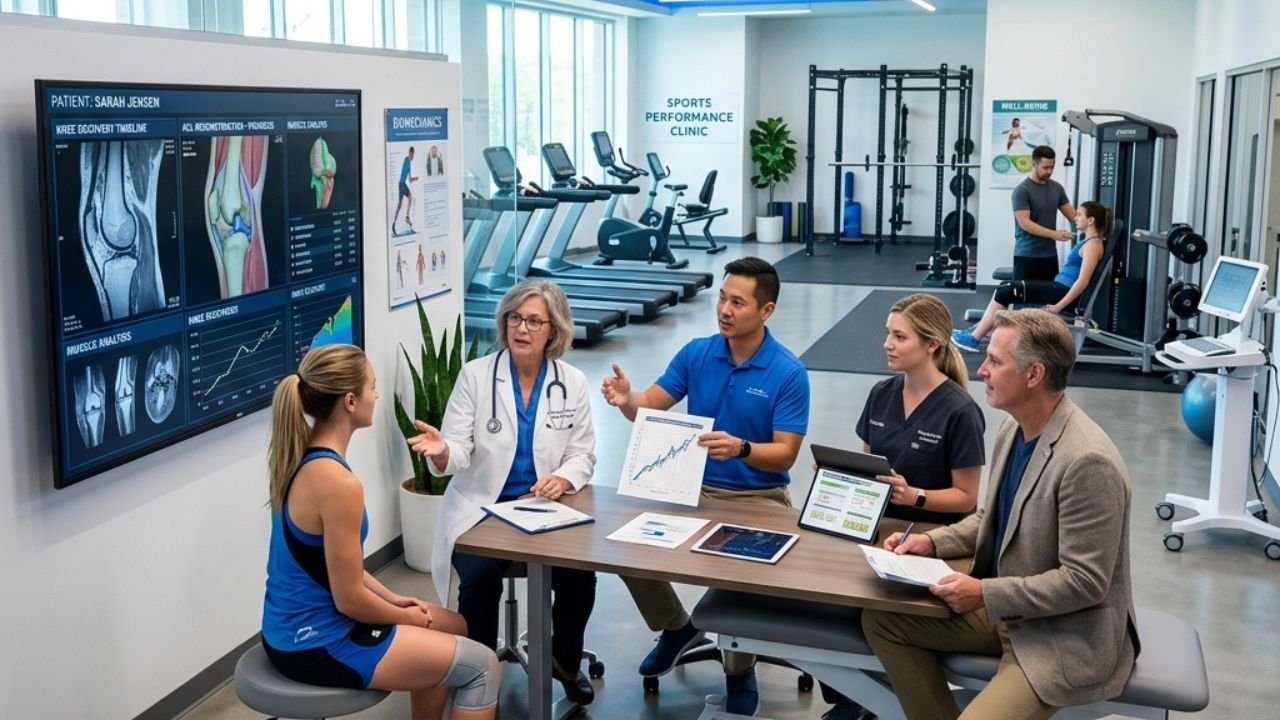
The best sports medicine hospitals in the USA combine orthopedic expertise, advanced diagnostics, and multidisciplinary care teams. Top-ranked institutions include the Hospital for Special Surgery (New York), Mayo Clinic (Minnesota), Cleveland Clinic (Ohio), Andrews Institute (Florida), and UCSF Health (California). Choosing the right facility depends on your injury type, sport, and recovery goals.
Sports medicine has evolved far beyond the sideline ice pack. For competitive athletes—whether amateur or professional—accessing the right medical care can mean the difference between a full recovery and a career-defining setback. With hundreds of hospitals across the country offering sports medicine services, knowing which ones truly excel requires a closer look at the people, programs, and technologies behind the name.
This guide breaks down what separates a good sports medicine program from a great one, profiles the top hospitals in the USA, and walks you through what to expect at every stage of the athlete care journey. By the end, you’ll have a clear framework for making an informed healthcare decision—one that supports not just recovery, but long-term athletic performance.
What Is Sports Medicine—and Why Does the Right Hospital Matter?
Sports medicine is a medical specialty focused on preventing, diagnosing, and treating injuries related to physical activity and athletic performance. That definition, however, only scratches the surface. The best sports medicine programs address the whole athlete: physical conditioning, mental resilience, nutritional health, and biomechanical efficiency.
Choosing the right hospital matters because sports injuries are not generic. A torn ACL in a 17-year-old soccer player requires a different approach than the same injury in a 35-year-old marathon runner. Recovery timelines, surgical techniques, rehabilitation protocols, and return-to-play standards vary significantly depending on the athlete’s age, sport, and performance goals. A hospital that treats sports injuries as routine orthopedic cases may not deliver the specialized, athlete-centered care that leads to optimal outcomes.
What Criteria Define the Best Sports Medicine Hospitals in the USA?
Multidisciplinary teams covering orthopedics, physical therapy, nutrition, and psychology
Elite sports medicine hospitals don’t operate in silos. The strongest programs bring together orthopedic surgeons, physical therapists, sports dietitians, neurologists, and sports psychologists under one roof. This collaborative model ensures that every dimension of an athlete’s health is addressed simultaneously—not sequentially.
Advanced diagnostic and treatment technologies
Access to cutting-edge imaging—including high-resolution MRI, motion capture analysis, and musculoskeletal ultrasound—enables faster and more accurate diagnoses. On the treatment side, technologies like robotic-assisted surgery, platelet-rich plasma (PRP) therapy, and cryotherapy are now standard at leading institutions.
Research and innovation in sports medicine
Hospitals that actively conduct clinical research stay at the forefront of evolving treatment methods. Look for institutions affiliated with academic medical centers or those with published outcomes data in peer-reviewed journals.
Athlete-centered rehabilitation programs
Recovery doesn’t end in the operating room. The best hospitals design rehabilitation programs that are structured around the athlete’s sport-specific demands—not just general fitness recovery.
Reputation and patient outcomes
Volume matters. Hospitals that perform high numbers of specific procedures (like ACL reconstructions or rotator cuff repairs) tend to have better outcomes, lower complication rates, and faster recovery times.
Top Hospitals for Sports Medicine in the USA
Hospital for Special Surgery (HSS) — New York, NY
Consistently ranked the #1 orthopedic hospital in the United States by U.S. News & World Report, HSS has built a global reputation for musculoskeletal care. The HSS Sports Medicine Institute offers specialized services for over 35 sports, with dedicated programs for running, baseball, dance, and combat sports. HSS surgeons have served as team physicians for the New York Mets, New York Giants, and New York Red Bulls, among others. Their research division publishes extensively on ACL injury prevention, cartilage restoration, and shoulder biomechanics.
Mayo Clinic — Rochester, MN (with campuses in AZ and FL)
Mayo Clinic’s Sports Medicine Center provides integrated care across orthopedics, physical medicine, and rehabilitation. What sets Mayo apart is its diagnostic precision—athletes benefit from thorough evaluations that combine imaging, performance testing, and specialist consultations, often within a single day. Mayo is also recognized for its work in concussion management and return-to-sport decision-making, areas where many facilities still lack standardized protocols.
Cleveland Clinic — Cleveland, OH
The Cleveland Clinic’s Orthopaedic & Rheumatologic Institute houses one of the most comprehensive sports medicine programs in the Midwest. Cleveland Clinic has served as the official medical provider for the Cleveland Guardians and Cleveland Cavaliers, and its sports health team includes more than 60 providers across orthopedics, physical therapy, and sports nutrition. Cleveland Clinic is also notable for its outcomes transparency—the institution publishes patient outcome data publicly, a practice that signals confidence in its results.
Andrews Institute for Orthopaedics & Sports Medicine — Gulf Breeze, FL
Founded by Dr. James Andrews—arguably the most recognized sports surgeon in the country—the Andrews Institute specializes in complex orthopedic and sports medicine procedures. The institute has treated some of the most high-profile athletes in NFL, NBA, and MLB history. Its focus on minimally invasive techniques and sport-specific rehabilitation protocols has made it a destination facility for athletes seeking specialized care outside major metropolitan areas.
UCSF Health — San Francisco, CA
UCSF’s Sports Medicine Center combines the resources of a leading academic medical center with a strong clinical program for recreational and competitive athletes alike. UCSF is particularly recognized for its work in biomechanical analysis, where motion capture technology helps identify injury-prone movement patterns before they become problems. The institution also offers dedicated programs for youth athletes and masters-level competitors—two populations that are often underserved at major sports medicine centers.
Rothman Orthopaedic Institute — Philadelphia, PA
With a network of locations across the Mid-Atlantic region, Rothman Orthopaedic has built a reputation for high-volume, high-quality orthopedic sports medicine. Rothman physicians serve as team doctors for the Philadelphia Eagles, Philadelphia 76ers, and Philadelphia Phillies. The institute’s research division is particularly active in joint preservation techniques and biologics—including PRP and stem cell therapies—that aim to extend athletic careers and reduce the need for surgical intervention.
Steadman Clinic — Vail, CO
The Steadman Clinic and its affiliated Steadman Philippon Research Institute are known globally for pioneering work in knee and hip surgery. Their development of the “healing response” technique for ACL repair—an alternative to traditional graft reconstruction—reflects the kind of innovation that keeps the clinic at the cutting edge of sports medicine. The Steadman Clinic attracts professional skiers, cyclists, and alpine athletes, but treats patients from all sports and skill levels.
Understanding Subspecialties in Sports Medicine
Orthopedic sports medicine: ACL repair, rotator cuff surgery, and beyond
Orthopedic sports medicine covers injuries to bones, ligaments, tendons, and cartilage. High-frequency procedures include ACL reconstruction, meniscus repair, rotator cuff surgery, and labral repair. Surgeon experience and volume in these specific procedures are strong predictors of patient outcomes.
Concussion management programs
Concussion care has become one of the most scrutinized areas in sports medicine, particularly in contact sports like football, hockey, and soccer. Leading hospitals now offer structured concussion management programs that include baseline neurocognitive testing, ImPACT assessments, and multidisciplinary return-to-play clearance—rather than relying on symptom resolution alone.
Performance optimization and injury prevention
Prevention is as valuable as treatment. Many top hospitals now offer performance testing, movement screening, and sport-specific conditioning programs designed to reduce injury risk before athletes ever step into a clinical setting.
Regenerative medicine in sports
Regenerative therapies—including PRP injections, stem cell treatments, and bone marrow aspirate concentrate (BMAC)—are increasingly used to accelerate healing in tendons, ligaments, and cartilage. While research continues to evolve, these treatments are now standard offerings at most elite sports medicine centers.
Pediatric sports medicine
Youth athletes present unique challenges: growing bones, developing tendons, and age-specific injury patterns like apophysitis and growth plate fractures. Hospitals with dedicated pediatric sports medicine programs are better equipped to manage these cases without compromising long-term development.
How Does the Athlete Care Journey Work at a Sports Medicine Hospital?
Initial consultation and diagnosis
The first visit typically involves a detailed medical history, physical examination, and diagnostic imaging. At top-tier institutions, this process may also include biomechanical assessment and consultations with multiple specialists—providing a comprehensive picture from the outset.
Surgical vs. non-surgical treatment options
Not every sports injury requires surgery. Many conditions—including certain ligament sprains, stress fractures, and tendinopathies—respond well to non-surgical management through physical therapy, bracing, and targeted injections. When surgery is necessary, minimally invasive arthroscopic techniques are preferred whenever possible to reduce recovery time and preserve surrounding tissue.
Rehabilitation and physical therapy: the most critical phase
Research consistently shows that the quality of post-injury rehabilitation is as important as the quality of the surgical procedure itself. The best sports medicine hospitals deploy sport-specific rehab programs that progressively reintroduce loading, restore neuromuscular control, and build the athlete back toward competition-level function.
Return-to-play protocols and performance enhancement
Return-to-play decisions should be based on objective functional criteria—not time alone. Leading programs use performance benchmarks, psychological readiness assessments, and sport-specific testing to determine when an athlete is truly ready to compete.
Key Questions to Ask When Choosing a Sports Medicine Provider
What is their experience with my specific injury and sport?
Ask how many procedures of your type the surgeon or team performs annually, and whether they have experience with athletes in your specific sport. High-volume providers with sport-specific expertise tend to deliver better outcomes.
What is the team’s approach to recovery and long-term athletic health?
Ask whether rehabilitation is conducted in-house or referred out, how treatment plans are individualized, and what the expected timeline looks like for your specific injury and goals.
What support services are available beyond orthopedics?
The strongest programs offer integrated access to sports dietitians, sports psychologists, and performance coaches. Ask explicitly whether these services are available—and whether they communicate regularly with your primary care team.
Empowering Athletes with Informed Healthcare Choices
The best sports medicine hospital for any individual athlete is the one that treats the whole person—not just the injury. That means combining surgical precision with evidence-based rehabilitation, integrating support from nutrition and mental health professionals, and building a care plan that aligns with the athlete’s specific goals and timeline.
The institutions profiled here—HSS, Mayo Clinic, Cleveland Clinic, Andrews Institute, UCSF, Rothman Orthopaedic, and the Steadman Clinic—represent some of the highest standards in the field. Each brings distinct strengths, and the right choice depends on factors like injury type, location, insurance coverage, and personal priorities.
Looking ahead, sports medicine continues to advance rapidly. Regenerative therapies are becoming more refined, wearable technology is enabling real-time injury risk monitoring, and telehealth is expanding access to sports medicine expertise beyond major metropolitan areas. Athletes who understand their options—and ask the right questions—will be best positioned to benefit from these developments.
Your performance is built over years. Your healthcare decisions deserve the same level of care and research.
Frequently Asked Questions About Sports Medicine Hospitals in the USA
What is the best hospital for sports medicine in the USA?
The Hospital for Special Surgery (HSS) in New York has been ranked #1 for orthopedics by U.S. News & World Report for multiple consecutive years, making it widely considered the top sports medicine hospital in the country. Other top institutions include Mayo Clinic, Cleveland Clinic, and the Andrews Institute.
How do I know if I need a sports medicine specialist or a general orthopedic surgeon?
Sports medicine specialists focus specifically on athletic injuries and performance. If your injury is related to sport or physical activity—particularly if you want to return to competition—a sports medicine specialist is generally better suited to your needs than a general orthopedic surgeon.
What is the difference between orthopedic surgery and sports medicine?
Orthopedic surgery addresses structural problems in the musculoskeletal system, including fractures and joint replacements. Sports medicine is a broader specialty that includes both surgical and non-surgical care, with a specific focus on athletes and active individuals. Many sports medicine physicians are also trained orthopedic surgeons.
Are regenerative medicine treatments like PRP covered by insurance?
In most cases, regenerative treatments like PRP and stem cell therapy are not covered by standard health insurance plans in the USA, as they are often classified as experimental or elective. Costs vary widely depending on the provider and treatment type.
What should I bring to my first sports medicine appointment?
Bring any relevant imaging (X-rays, MRI scans), a list of previous treatments or surgeries, and a clear description of your symptoms, activity level, and performance goals. The more detail you can provide about your sport and training history, the more tailored your initial assessment will be.